Patrick »
24 February 2014 »
In mlb prospects, nichibei, npb »
In recent weeks, I’ve written about some of the better MLB prospects who are currently active in Japan, and looked back at some of skills that have translated well from NPB to MLB. Now we’ll see how Japan’s Next Top Pitcher, Kenta Maeda, stacks up against his most recent predecessors.
Maeda let the cat out of the bag during his 2014 contract negotiations that he wants to play in MLB in the future, leading to widespread speculation that he’ll be posted following this season. Let’s assume, for the sake of this article, that he enjoys another Maeda-esque season in 2014 and is indeed posted after the season. What will he bring to the MLB negotiating table? Here’s my breakdown of his strengths and weaknesses:
Maeda’s strengths:
- A fastball that won’t be a liability at the MLB level.
- An ability to locate at least two breaking pitches, a slider and a changeup.
- He gets his curve into the strike zone as well.
- An ability to suppress hits. Maeda has allowed just 7.51 per 9IP over his 1116.1 inning career. In 2013, he allowed just 6.61 hits per 9IP.
- Health and durability. Maeda has never had a serious injury, and has topped 175 IP in each of the last five seasons.
- Consistency. Maeda’s WHIPs over the last four years: 0.98, 1.02, 0.99, 0.99.
Maeda’s weaknesses:
- Overall his stuff is just not as whiff-inducing as Yu Darvish’s or Masahiro Tanaka’s.
- He has lacked the eye-popping K:BB ratios of guys like Tanaka, Koji Uehara or Colby Lewis, though he is no slouch at about 5:1.
- I’ve noticed he can nibble a bit.
- On my list, Maeda’s build and stuff resemble’s Kenshin Kawakami’s more than anyone else.
I started off being pretty lukewarm on Maeda, but I’ve warmed up quite a bit. He doesn’t measure up to Darvish or Tanaka, but that’s setting the bar pretty impossibly high. Kawakami might be the best comparable among NPB starters who have made it to MLB in the last five years, but Maeda is younger, healthier and more consistent than Kawakami was. And let’s also remember that Kawakami was something like an average National League starter in his first MLB season. My guess is that Maeda can hack it in MLB, though he’s probably a mid-rotation guy.
Of course, the 2014 season hasn’t yet begun, and anything can happen. But I don’t really expect Maeda to deviate much from the consistent performance he’s shown over the last five years.
Continue reading...
Tags: Colby Lewis, Kenshin Kawakami, Kenta Maeda, Koji Uehara, Masahiro Tanaka, Yu Darvish
Patrick »
01 February 2014 »
In mlb, nichibei, npb »
I’ve been thinking a lot about Masahiro Tanaka and how he might perform in year one of his newly-minted mega deal.
My theory is that observable skills are a better predictor of MLB success than statistics. As an example, a pitcher with good control of an obvious out pitch is a better bet than a pitcher who is good all around, but lacks a dominant skill. This might sound obvious, but the media and casual baseball conversation centers around Tanaka’s 24-0 record and 1.27 ERA, rather than his ability to suppress walks and home runs.
So, I took a look back on the group of starters that have moved from NPB to MLB on Major League contracts since I began writing in mid-2008.
| 1st MLB Season |
Pitcher |
Strengths |
Weaknesses |
MLB fWAR |
| 2014 |
Masahiro Tanaka |
suppressed walks, great splitter, good slider, healthy |
not quite Darvish |
? |
| 2012 |
Yu Darvish |
dominant in every way year after year |
The legacy of Daisuke Matsuzaka |
9.8 |
| 2012 |
Hisashi Iwakuma |
great splitter, groundball machine, limited home runs |
injured in 2011, didn’t look like himself |
4.8 |
| 2012 |
Wei-Yin Chen |
lefty who at one time showed electric stuff, dominant in 2009 |
had regressed quite a bit by 2011 |
4.3 |
| 2012 |
Tsuyoshi Wada |
decent control, decent changeup |
undersized; poor fastball velocity; looked spent at the end of 2011 |
0 |
| 2010 |
Colby Lewis |
phenomenal K:BB ratio, good arm |
was improvement in control due to him or the league? |
9.6 (post return) |
| 2009 |
Kenshin Kawakami |
great cutter, innings eater |
not much upside beyond #3 starter |
2.4 |
| 2009 |
Koji Uehara |
phenomenal K:BB ratio, great splitter |
injury history, could he handle starting? |
8.8 (mostly in relief) |
My first reaction is that this is pretty good group. Wada was a bit of a bust, but he was injured. Kawakami comes the closest to being evidence of my theory, as he didn’t really dominate any statistical category, but I think he could have shown more if the Braves hadn’t buried him. The rest of these pitchers have either met or exceeded expectations since moving to MLB.
This seems to bode pretty well for Tanaka, as he shows two above average pitches and dominated a number of statistical categories in NPB. We’ll see how it bodes for the pitchers who are currently active in Japan in a follow up article in the next couple of days, assuming the writing gods smile upon me.
Continue reading...
Tags: Colby Lewis, Kenshin Kawakami, Koji Uehara, Masahiro Tanaka, Tsuyoshi Wada, Wei-Yin Chen, Yu Darvish
Patrick »
27 January 2012 »
In nichibei, npb »
Update: Kawakami’s agreement with Chunichi is for one year and JPY 30m ($390k), reports the Mainichi Shimbun. An official contract and press conference are set for Jan 31 in Okinawa.
Multiple reports out of Japan are saying that former Atlanta Brave Kenshin Kawakami is negotiating with the Chunichi Dragons. Among the reports, the Asahi Shimbun reports that a basic agreement is in place and an announcement is due in the next few days, while the Mainichi Shimbun adds that Chunichi offered a one-year deal at a “low budget.” Kawakami won 112 games for Chunichi between 1998 and 2008 before heading to Atlanta as a free agent.
Continue reading...
Tags: Kenshin Kawakami
Patrick »
17 January 2012 »
In mlb, nichibei, npb »
With spring training a mere two weeks away, NPB teams are largely done making offseason roster moves. But Buster Olney’s observation that there are a number of established MLB players that are still available on the free agent market got me wondering if any would be fits in Japan. Here’s what I came up with:
- Kosuke Fukudome — There has been surprisingly little discussion of a Fukudome return in the Japanese media, the only rumor of note being that Hanshin was considering him as a replacement for Matt Murton, who they successfully re-signed.
- Kenshin Kawakami — Kawakami’s name has been similarly absent in the Japanese media this offseason. The only news I’ve seen on him is from his personal blog, saying he’s begun working out and hasn’t decided on a team for 2012 yet. It’s reasonable to assume that most NPB rotations would benefit from having him around.
- Dan Johnson — Johnson played for Yokohama in 2009, and was solid aside from a .215 batting average. Since then, he’s returned to US with the Rays organization, where he’s played well in Durham but been overmatched in Tampa Bay, and developed a penchant for clutch home runs. He does enough things well to be of value to an NPB team.
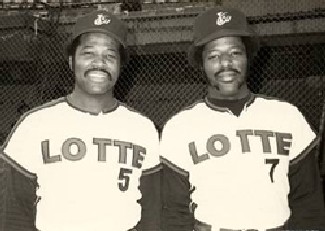
- Derrek Lee — Had they not already signed Josh Whitesell, Lee might have been a first base match for Lotte, an organization that once employed his father and uncle (Leon Lee and Leron Lee). Derrek spent part of his youth in Japan.
- Marcus Thames — Thames has appeared on NPB team’s foreign player candidate lists in the past, but surprising he’s only gotten one previous mention on this site. Power was the rarest skill in Japan last year, and Thames has shown plenty at both the 3A and MLB level.
- Bill Hall — Hall is something of a personal favorite; I thought he would have a better MLB career than he’s had. He still has at least two solid strengths – a power bat and a strong throwing arm – that match up with teams in need of third base help (Yokohama?).
Continue reading...
Tags: Bill Hall, Dan Johnson, Derrek Lee, Jose Ortiz, Josh Whitesell, Kenshin Kawakami, Kosuke Fukudome, Leon Lee, Leron Lee, Marcus Thames, Matt Murton
Patrick »
03 January 2012 »
In npb »
The other day, Sports Hochi reported that, in the event that he signs with the Rangers, the Nippon Ham Fighters will “semi-retire” Yu Darvish’s number 11. The number won’t be officially retired, but will remain unused until the team develops another “absolute, Darvish-caliber ace”.
So it’ll be something like a Nippon Ham adaptation of number 18, Japanese baseball’s recognized “ace number”. Incidentally, Darvish wore 18 for Japan’s 2008 Olympic Team, because Kenshin Kawakami had 11. I could have my historical facts not-quite-right here, but I believe the ace number tradition was popularized by 18-wearer Tsuneo Horiuchi, Yomiuri’s 60’s and 70’s-era ace. After Horiuchi retired, number 18 was eventually passed down to Masumi Kuwata who went on to have a lengthy career. Every NPB except Yakult currently has number 18 assigned to a pitcher. In the Major Leagues, Hiroki Kuroda, Daisuke Matsuzaka and now Tsuyoshi Wada wear number 18.
I’m on board with this one, I think treating 11 as a new ace number is a great idea. Darvish’s tenure in NPB has been short, but legendary, and he’s certainly left his mark on Japanese baseball.
Continue reading...
Tags: Daisuke Matsuzaka, Hiroki Kuroda, Kenshin Kawakami, Masumi Kuwata, Toshiya Sugiuchi, Tsuneo Horiuchi, Tsuyoshi Wada, Yu Darvish
Patrick »
03 December 2011 »
In mlb prospects, nichibei »
So unsurprisingly, I’m getting questions this offseason about how guys like Tsuyoshi Wada, Hiroyuki Nakajima and Wei Yin Chen project as MLB prospects. Truth be told, trying project established guys from NPB to MLB always makes me a little nervous. I don’t feel like I’m that great at it, so I decided to go back and look at my public track record, to give you the chance to decide if I’m worth listening to.
Here’s what I found:
- Koji Uehara — I was bullish on him when he moved across the Pacific; injury history had me questioning whether he could start; he was one of my favorite guys to watch in Japan and I’m glad he’s done well.
- Kenshin Kawakami — My synopsis was “mid-rotation guy you can win with“. In retrospect that was a little aggressive; he was more like a competent #4 guy before the Braves decided to bury him.
- Hitoki Iwase — I thought his stuff would translate to MLB, particularly after watching Scott Downs pitch; he obviously never moved to MLB.
- Junichi Tazawa — I really liked his stuff, but also expected him to hit a wall somewhere. He reached the majors before hitting a wall, which really impressed me.
- Ken Takahashi — I predicted “a little bit of an uphill battle” for Tak1, but also thought he could be a useful pitcher. He basically was for his year in the Mets organization, though his career ended immediately after returning to Hiroshima.
- Ken Kadokura — Remember when he signed with the Cubs? I felt like he had something left in the tank, but he wound up getting dropped by the Cubs at the end of spring training and went on to have a few good years in Korea.
- Hisanori Takahashi — IÂ liked Tak2 a lot better as a reliever than a starter; that one turned out to be true.
- Ryota Igarashi — I don’t think I made an explicit prediction for Igarashi, but I thought he would do okay. He didn’t seem to trust his stuff in his first year, and though he did better in year two, he went from “effectively wild” in NPB to just “wild” with the Mets.
- Chang-Yong Lim –Â Like Igarashi I don’t know that I really made an explicit prediction for him, though I really liked his stuff. I still do. Lim is still with Yakult and not a free agent, and I doubt we’ll ever see him in MLB.
- Colby Lewis — I found reasons to be optimistic about Lewis in his return to the Rangers, but he certainly has exceeded my expectations.
- Tsuyoshi Nishioka — Over at Fangraphs, I called Nishioka a “Chone Figgins/Ryan Theriot type”. What I meant by that was that he could be an infielder who would get on base but have minimal power, and play decent defense. I didn’t see him flaming out in year one the way he did.
- Hisashi Iwakuma — Also at Fangraphs, I put Iwakuma’s upside at mid-rotation, noting he has to keep his forkball and he will probably regress some in innings pitched. I still mostly think this is the case, assuming he’s healthy. We’ll find out next year.
- Yoshinori Tateyama — I never published much of anything about Tateyama, though I have an unfinished draft still sitting on Fangraphs, where I intended to make the case that he could be an MLB ROOGY/righty specialist. There was little original thought there, as he was dominant against righties in 2010 for Nippon Ham. In 2011 he exhibited a similar split for the Rangers, with a 2.04 against righties, versus 7.71 against lefties.
I kind of set out to prove that I’m not that great at these predictions, so I was surprised that the results here actually weren’t too bad. I seemed to do all right with Uehara, Tak1 and Tak2, while I probably underestimated Lewis and over-predicted Nishioka. The Nishioka flop makes me worry that I don’t know how to project position players. I think overall though, it’s pretty clear that I tend to see the glass as half-full with these guys as prospects. I also noticed here was that I seem to look at specific skills and how they might translate, rather than trying to project specific stats. Maybe I’m more of a scout than a numbers guy at heart.
That said, there are plenty of things I’ve been wrong about, I just haven’t always had a platform like this to assert my wrongness. If NPB Tracker had been around, however, I would have told you that…
- …of the two Matsuis, Kazuo was the far better MLB prospect. I was a huge fan of Kazuo’s; I saw him as a five-tool player.
- …Kei Igawa’s changeup was going to be a good MLB pitch.
- …Nagisa Arakaki was Japan’s next great pitcher.
- …So Taguchi wouldn’t have anything to offer to and MLB club.
…and so on.
So you might see me make a few statements on how I think the 2012 NPB imports may perform after they cross the Pacific. I’ll let you decide the appropriate measure of salt to take them with.
Continue reading...
Tags: Chang Yong Lim, Colby Lewis, Hiroyuki Nakajima, Hisanori Takahashi, Hisashi Iwakuma, Hitoki Iwase, Junichi Tazawa, Kazuo Matsui, Kei Igawa, Ken Takahashi, Kenshin Kawakami, Koji Uehara, Nagisa Arakaki, Ryota Igarashi, So Taguchi, Tsuyoshi Nishioka, Tsuyoshi Wada, Wei-Yin Chen, Yoshinori Tateyama
Patrick »
22 September 2011 »
In npb »
When I woke up this morning and did my daily check of the news, I was surprised to see headlines that included the words “Ochiai” and “leaving the team”. My first thought was, “why is Hiromitsu Ochiai stepping down as manager of the Chunichi Dragons?” But he’s not quitting, Chunichi’s management has decided not to renew his contract, electing to replace him with 70 year-old former Dragons manager Morimichi Takagi. When given the news from Chunichi owner Bungo Shirai, Ochiai said, “yes, understood”, and later commented “that’s the kind of world this is.”
This is either pure baseball idiocy or there’s something behind the scenes that isn’t public knowledge. Ochiai’s Dragons have done little other than win since he took over in 2004. In the seven seasons he’s managed, the Dragons have finished first or second every year, except 2008, when they finished third. The Dragons have also made four Nippon Series appearances under Ochiai’s watch (2004, 2006, 2007, 2010), winning the big prize in 2007. This year, despite my predictions, the Dragons are again in second place, within striking distance of first place Yakult as the season winds down.
The Dragons’ success has come in spite of losing star contributors like Kosuke Fukudome, Kenshin Kawakami and Tyrone Woods over the years. Chunichi for the most part hasn’t acquired expensive replacements for their departed stars, instead extracting useful performances from bargain bin foreign players like Tony Blanco and Enyelbert Soto, and developing prospects like Wei-Yin Chen, Kazuki Yoshimi and Masahiko Morino. The one notable free agent signing Chunichi made, Kazuhiro Wada (to replace Fukudome), blossomed into an MVP winner under Ochiai.
So I don’t get it. I think this is the worst NPB managerial change since Yomiuri forced Tatsunori Hara out and replaced with with the reviled Tsuneo Horiuchi following the 2003 season (Hara’s crime: finishing second to Hanshin). The winner could wind up being Nippon Ham, the team Ochiai finished his playing career with, if they can convince him to move north to Hokkaido and replace outgoing manager Masataka Nashida.
Update: Daily Sports says Ochiai is on his way out because of his high salary (JPY 370m) and the fact that Chunichi never turned a profit during his run as manager.
Continue reading...
Tags: Chunichi Dragons, Enyelbert Soto, Hiromitsu Ochiai, Kazuhiro Wada, Kazuki Yoshimi, Kenshin Kawakami, Kosuke Fukudome, Masahiko Morino, Tony Blanco, Tyrone Woods, Wei-Yin Chen
Patrick »
05 September 2011 »
In nichibei, npb »
Since well before I started this site in 2008, there have been persistent rumors in both the Japanese and North American media to the effect of “Yu Darvish will move to MLB this offseason FOR SURE.”
My role in this particular rumor mill over the last three years can be summarized with the below image:

To reiterate my position of the last few years, I’ve consistently predicted against Darvish moving to Major League Baseball, citing the following observations:
- Darvish had a pattern of adamantly disavowing any interest in playing in the Majors. This runs counter to other NPB stars like Koji Uehara and Kenshin Kawakami, who openly talked about wanting to play in MLB years before they moved across the Pacific.
- Darvish will not be an international free agent until after the 2014 season. It doesn’t make sense financially or competitively for Nippon Ham to post Darvish until it’s clear that they have to.
If I do say so myself, I’ve been right about this so far.
But this year I’m changing my tune a bit. For the first time, I can see him getting posted in this immediately upcoming offseason. Here’s why:
- Darvish softened his stance on playing in MLB last year. It does seem that the Japanese media has mostly shied away from directly asking him about an MLB move though.
- Last year he admitted to having contact with big-name MLB agents. Last month MLBTR confirmed that he is represented by Arn Tellem and Don Nomura.
- He’s in the middle of his fifth straight crushingly dominant season, and is obviously unchallenged by NPB competition.
- He’s bulked up from 90kg to 100kg. In Imperial that’s 198 lbs to 220 lbs.
- He’s consistently working in the upper end of his velocity range, around 150-156kmph (93-97mph) and seems to challenging hitters more. I wonder if he’s putting on a show for the scouts, since he has shown that he is perfectly capable of dominating with lower fastball velocity.
- The number of scouts present at his games continues to increase. Logic suggests that at some point this is likely to become a distraction.
- He’s got three full years to go prior to free agency. If Nippon Ham or Darvish can’t get the right deal, they can call it off and try again next year.
There are probably others as well, but I’ll stop with those. I don’t think any one of those single things jumps up and screams “he’s getting posted!” but they all add up to hint that it’s possible. So I can see it happening.
Based on the information we have, I’d also say there’s a chance that Darvish won’t be posted this offseason. In the Japanese press, only the sleaziest gossip tabloids seem to really delve into the details of what might be behind a Darvish move; the more mainstream sports papers usually just report on the scouts that watch him. One of the tabloids, Shukan Playboy, actually did a pretty good job piecing together different bits of the story. Their main objective seemed to be gathering evidence in support of speculation that Darvish would wind up with the Yankees, but perhaps inadvertently, they included a point that seldom comes up in the North American media. An unnamed sports writer quoted in the article said “the possibility that Farsa (Darvish’s father), who is seeking the optimal business chance, could decide ‘the the time is not right’ is not zero.” I take anonymous writers quoted in Shukan Playboy with an appropriate measure of salt, but it’s an interesting counterpoint to most of the English language reporting we get on this topic.
So I could see it happening. I could see it not happening. I don’t think I’ll be surprised either way.
Continue reading...
Tags: Kenshin Kawakami, Koji Uehara, Yu Darvish
Adam »
22 April 2011 »
In mlb »
An brief update on some Major Leaguers as we head into the weekend.
- Kenshin Kawakami, who had been assigned to AA to begin the season, will be placed on the DL with right shoulder pain. This comes on the heels of his first 2011 win with the Mississippi Braves.
- Following the evaluation of x-ray results on Tuesday, the Twins’ Tsuyoshi Nishioka plans to be back on the field “by mid-May, at the earliest.” Nishioka is currently undergoing rehabilitation following an injury suffered in a game versus the Yankees on April 7th.
- Ryota Igarashi said that the New York Mets “have no leader” after a frustrating loss against the Astros on Monday.
Continue reading...
Tags: Kenshin Kawakami, Ryota Igarashi, Tsuyoshi Nishioka
Adam »
25 March 2011 »
In mlb »
A few updates from Japan as MLB players are finishing up spring training and preparing for Opening Day.
- For those who haven’t been following the Twins this spring, MLB rookie Tsuyoshi Nishioka has hit in 12 straight spring training games. “It’s important (for me) to get used to being tired,” Nishioka told reporters following his first day game after a night game. He will also start on the 25th against the Orioles.
- Kenshin Kawakami, a trade candidate for what seems like ages, will try to impress in his last spring training appearance for the Braves on March 27th. Kawakami allowed 3 runs (1 earned) in 3 innings in his first spring start this week.
- Meanwhile in Arizona, the Dodgers’ Hiroku Kuroda says he’s not bothered by his spring training results. “I’ve come this far without getting hurt, and that’s the most important thing.” Kuroda, who has been working on a curve ball this spring and currently sports a 5.78 ERA, will make his first regular season start against the Giants on April 3rd.
- Koji Uehara returned to action earlier this week in a minor league game, pitching a scoreless inning with one strikeout. Uehara has battled elbow issues this spring but remains upbeat. “As long as my elbow and my face are in good shape, I’m okay.” The Orioles’ reliever was clocked at 88 mph in his minor league appearance, but assured reporters he was only throwing “at 70 or 80 percent…I feel great.”
- Hisanori Takahashi continues to dazzle, having allowed no runs over 11 innings in relief. He’ll be the lefty set up man in the Angels’ bullpen to start the year. Regarding the start of the regular season, Takahashi says, “I don’t need to change anything.”
- Hideki Matsui‘s statement on Thursday that, “My job is the DH. More than defending, I’ve got to hit,” reinforces the fact that he is no longer a reliable outfield option. Despite a spring batting average that has sunk to .125, Matsui told reporters, “It’s no problem. Everyone starts out hitting .000 on opening day.”
Continue reading...
Tags: Hideki Matsui, Hiroki Kuroda, Hisanori Takahashi, Kenshin Kawakami, Koji Uehara, Tsuyoshi Nishioka